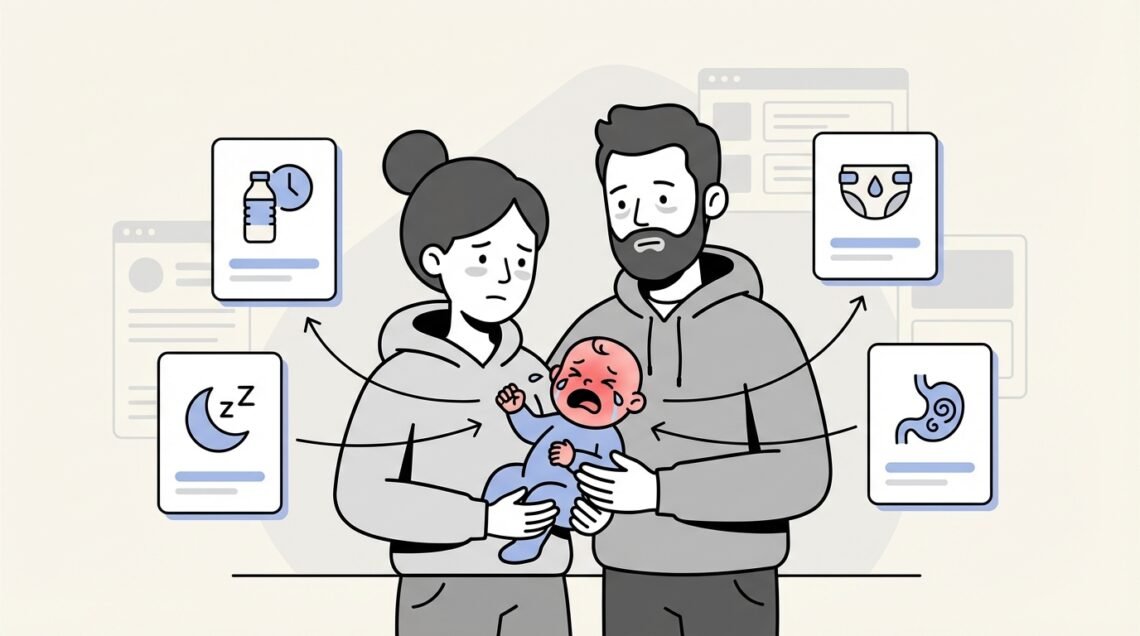
The sound of a baby crying can feel like an alarm you just can’t turn off. If you’re reading this, you’re probably tired, stressed, and maybe feeling a little desperate. To start, take a deep breath. You are not doing anything wrong, and you are definitely not alone. This is one of the toughest parts of being a new parent, and pretty much everyone goes through it.
Crying is your baby’s only way of talking right now. It’s their language for “I’m hungry,” “I’m tired,” or “I just really need a cuddle.” The hard part is figuring out which one it is. Think of this guide as your checklist to run through the possibilities and figure out what your little one is trying to tell you.
Understanding what’s normal for a crying baby
It might not feel like it at 3 a.m., but all babies cry. It’s a normal part of their development. For the first few weeks, newborns cry often on average. This usually hits its peak around the six-week mark and then starts to ease up as they get older and find other ways to communicate (like that first amazing smile).
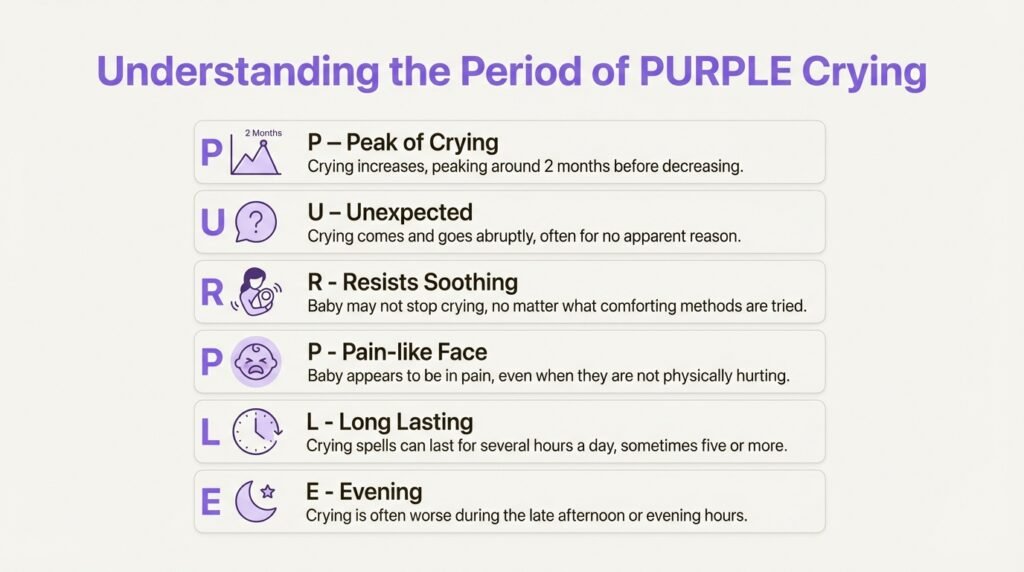
You’ve probably heard people mention “colic.” It’s often defined by the “rule of threes”: a baby who cries for more than three hours a day, for more than three days a week, for more than three weeks. There’s also something called the Period of PURPLE Crying, which is just a phase where some babies cry a lot more and are tough to soothe. This usually starts around two weeks and lasts until they’re about three to four months old.
The main thing to remember is that sometimes, babies cry intensely without any obvious reason. It doesn’t mean you’re failing or that something is seriously wrong. This phase is temporary. It’s a mountain you have to climb, but you will get to the other side.
Hunger: A primary reason babies cry
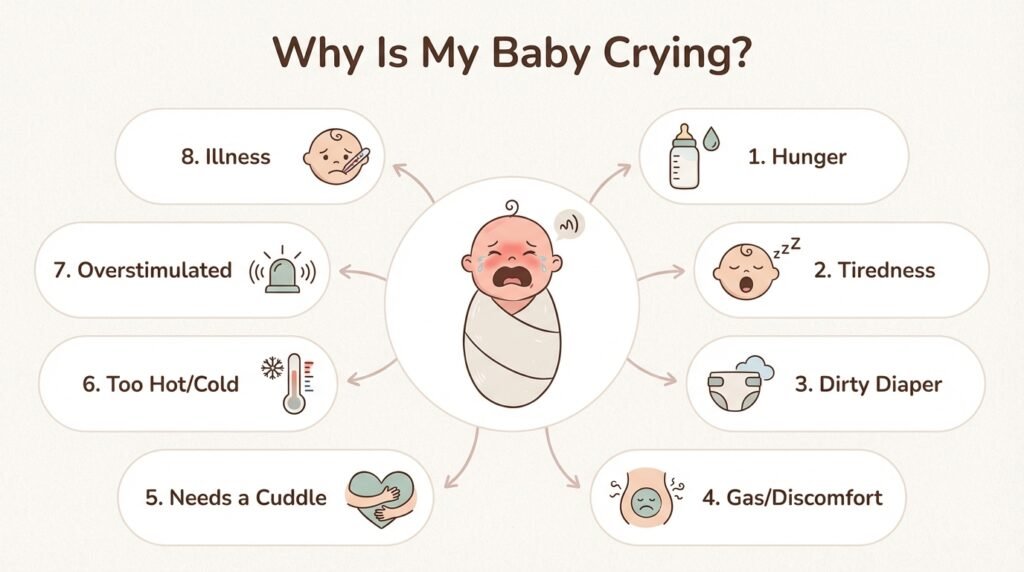
Hunger is almost always the top suspect when a newborn cries. Their tummies are tiny (about the size of a walnut at first), so they need to eat often, usually every two to three hours. It can feel like you just finished feeding them and they’re already hungry again. This is especially true during “cluster feeding,” when they want to eat almost constantly for a few hours, which often happens in the evenings.
The trick is to catch the hunger cues before the crying really kicks in. Look for these early signs:
- Rooting: Turning their head and opening their mouth, looking for a breast or bottle.
- Lip smacking or sucking sounds.
- Bringing their hands to their mouth or sucking on their fists.
When you see these signals, it’s time to offer a feed. By the time they start wailing, they’re already super hungry, or “hangry,” which can make it harder for them to latch on and calm down.
Online services with fast shipping options, like Amazon Prime, can be helpful for getting essentials delivered quickly, which is useful for unexpected shortages. To stay on track with feedings, especially when your hands are full, you can use a voice assistant to set timers by saying, “Alexa, set a two-hour feeding timer.”
Tiredness: An overtired baby may cry more
It sounds backward, but a baby who is overtired has a much harder time falling asleep. When they’re awake for too long, their bodies produce stress hormones like cortisol and adrenaline, which basically acts like a shot of espresso. This is why you’ll hear parents talk about “wake windows”: the amount of time a baby can comfortably stay awake between naps. For a newborn, this window is incredibly short, sometimes only 45 to 60 minutes.
If you miss that window, you get an overtired, fussy baby who fights sleep. Look for these common sleepy signs:
- Yawning
- Rubbing their eyes or ears
- A far-off, glazed-over look
- Becoming fussy or jerky
When you spot these, it’s time to start your wind-down routine. A few classic techniques can help a tired baby settle:
- Swaddling: Wrapping your baby snugly in a blanket feels like the womb and can stop their own startle reflex from waking them up.
- White Noise: A sound machine or even a fan can block out household noises and sound like the constant “whooshing” they heard before they were born.
- Gentle Motion: Rocking, swaying, or a walk in the stroller can be incredibly calming.
Online retailers like Amazon.com offer a wide selection of highly-rated swaddles and sound machines. If your hands are full, you can enable a skill like Sleep Little Babies and say, “Alexa, open Sleep Little Babies,” or stream a calming playlist from a service like Amazon Music. You can even create a “Nap Time” routine in the Alexa app that plays these sounds and dims your smart lights, signaling it’s time to rest.
Discomfort from a dirty diaper
This is one of the easier problems to solve. A wet or dirty diaper can be really uncomfortable, and for some babies, it’s an instant reason to cry. Some are more sensitive and will let you know right away, while others might not seem to mind for a bit.
A quick check is always a good idea when the fussing starts. Even if the diaper isn’t soaked, changing it often helps prevent diaper rash. A sore, red bottom can be painful and lead to a lot more crying, so it’s best to stay ahead of it.
To avoid running out of diapers, subscription services are available. For instance, Amazon’s Subscribe & Save allows for scheduled deliveries of preferred diaper brands, including their private-label options like Mama Bear. For an easy reminder when you’re on your last sleeve, you can tell a smart speaker, “Alexa, add diapers to my shopping list.”
Gas pain and discomfort
A baby’s digestive system is brand new and still getting the hang of things. They swallow a lot of air while feeding, and those trapped air bubbles can cause real discomfort. This is why burping is so important. Don’t just do it at the end of a feed; try to burp your baby every few ounces or when you switch sides.
If your baby is squirming, arching their back, or pulling their legs toward their chest, it could be gas. Here are a few things that can help:
- Good burping positions: The classic over-the-shoulder pat is great, but you can also sit them on your lap, supporting their chin and chest with one hand while patting their back with the other.
- Bicycle legs: Lay your baby on their back and gently move their legs in a bicycling motion.
- Tummy massage: Gently massage their belly in a clockwise direction to help get things moving.
- Supervised tummy time: A little time on their stomach (while they’re awake and you’re watching) can also apply gentle pressure that helps.
Some parents use gas drops or gripe water, but it’s always best to talk to your pediatrician before giving your baby anything new. When you’re looking at options, the parent reviews on Amazon.com product pages can give you some real-world feedback to bring up with your doctor. You can also find helpful video guides from other parents on platforms like Prime Video.

Other common reasons for crying
If you’ve run through the big four (hunger, tiredness, diaper, gas) and your baby is still upset, it’s time to play detective.
- Temperature: Are they too hot or too cold? Feel the back of their neck or their chest to check. Their hands and feet are often cool, so they aren’t a good gauge.
- Overstimulation: Too much noise, bright lights, or people can be overwhelming for a newborn. Sometimes they just need a quiet, dim room to chill out.
- Loneliness or Boredom: Babies need connection. Sometimes, all they want is to be held close, to hear your voice, or just to look at something new.
- Pain or Illness: This is the one that worries parents the most. Trust your gut. Check for things that could be causing pain, like a hair wrapped around a toe (a hair tourniquet) or clothing that’s pinching. If the cry sounds different (maybe more high-pitched or urgent), if they can’t be soothed at all, or if you see other symptoms like a fever or vomiting, call your pediatrician right away.
A smart home can help you manage your baby’s environment. An Echo device can connect to a smart thermostat to adjust the room temperature with your voice. Many parents also find a monitor useful for checking in without disturbing them. The Ring Pan-Tilt Indoor Cam gives you a full 360° view of the nursery from your phone, with clear Color Night Vision and Two-Way Talk, so you can see and speak to your little one from anywhere.
The importance of self-care for parents
Seriously, this is the most important part. You can’t pour from an empty cup. It is incredibly hard to calm a baby when you’re feeling stressed, anxious, and exhausted. Your baby can pick up on your stress, which can make them even more upset.
If you feel like you’re at your breaking point, it is perfectly okay to put your baby down in a safe place, like their crib, and walk away for a few minutes. Go to another room, take some deep breaths, or listen to a song. Crying for a few minutes in a safe space will not hurt your baby.
Never, ever shake a baby. It can cause severe brain damage and even death. If you feel angry or overwhelmed, put the baby down and call for help. Reach out to your partner, a friend, a family member, or a parenting support hotline. Asking for help is a sign of strength.
During those brief moments to yourself, you could listen to an audiobook from Audible, like The Happiest Baby on the Block, to get more expert tips while you recharge. A few minutes of escape can make all the difference.
You will get through this
Figuring out why a newborn is crying is one of the most demanding jobs there is. Remember that crying is communication. Work your way through the checklist, trust your gut, and please, take care of your own mental health. This phase feels like it will last forever when you’re in it, but it is temporary. You’re doing a great job, and you will get through this.
Resources for your parenting journey
Services like Amazon’s Baby Registry can help in organizing essentials. These often include benefits such as welcome boxes or a completion discount on remaining items. Features may also include group gifting and extended return policies to help simplify the process.
Frequently Asked Questions
I’ve tried everything. Why is my baby still crying?
It’s incredibly frustrating when nothing seems to work. Double-check for less common issues like a piece of hair wrapped around a toe or uncomfortable clothing. Sometimes, babies cry because they are overstimulated or simply need to be held. It’s also possible they are going through a developmental phase, and the crying has no obvious cause. If you’re ever concerned, trust your instincts and call your pediatrician.
When should I be concerned about my baby’s crying?
Crying tends to peak around 6 weeks of age and usually decreases by 3-4 months. This is often referred to as the Period of PURPLE Crying. While a lot of crying is normal during this time, you should contact a doctor if the crying is accompanied by a fever, vomiting, or a sudden change in behavior, or if your parental intuition tells you something is wrong.
Could my baby’s crying be due to colic?
It might be. Colic is typically defined by the “rule of threes”: crying for more than three hours a day, more than three days a week, for over three weeks in an otherwise healthy baby. While it’s tough on parents, colic is a temporary phase and doesn’t mean you’re doing anything wrong.
Is it normal to feel stressed when my baby won’t stop crying?
Yes, it is completely normal to feel stressed, overwhelmed, and even angry. Caring for a crying baby is exhausting. It is crucial to take care of yourself. If you feel you’re reaching a breaking point, put your baby in a safe place like their crib and step away for a few minutes to calm down. Asking for help from a partner, friend, or family member is a sign of strength.
Can overstimulation cause a baby to cry?
Absolutely. Newborns have sensitive nervous systems and can easily get [overwhelmed by bright lights](https://www.healthline.com/health/baby/baby-wont-stop-crying), loud noises, or too much activity. If you suspect overstimulation, try moving your baby to a quiet, dimly lit room to help them decompress.
When should I call a doctor about my baby’s crying?
Trust your instincts. Call your pediatrician if your baby’s cry sounds different than usual (like high-pitched or pained), if they are inconsolable, or if the crying is paired with other symptoms like a fever, rash, vomiting, diarrhea, or a change in their feeding or sleeping habits.