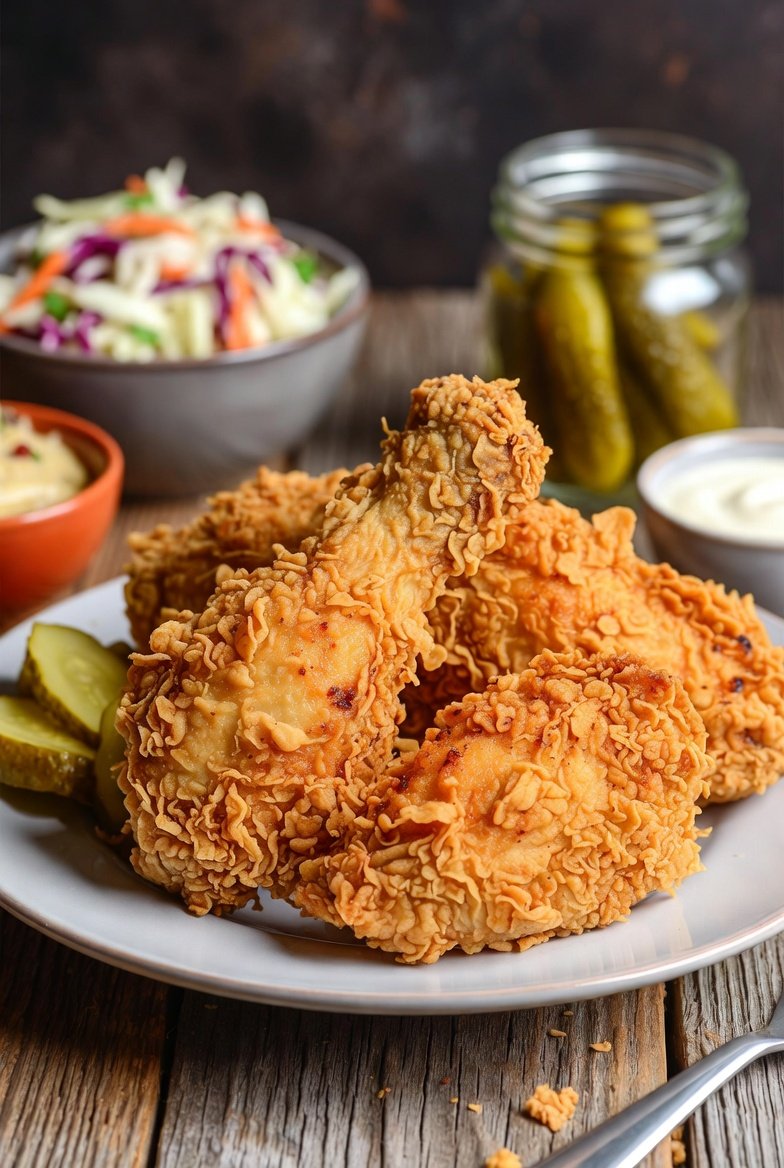
“Great fried chicken should be enrobed in an exterior that shatters as thin glass would when first pierced by teeth. And yet, you want it to hold on.” — Good Grit Magazine

Some recipes you make on a weeknight. And then there’s Southern fried chicken — the kind you slow down for, that fills the whole house with an aroma that has people wandering into the kitchen before you even call them. It’s crispy, it’s juicy, it’s deeply seasoned, and it has a history stretching back centuries. If you’ve been settling for soggy coatings or dry meat, this is the recipe that changes things.
This isn’t fast food imitation. This is the buttermilk-marinated, cast-iron-fried, cooling-rack-finished real thing — and once you try it, you’ll understand exactly why Southern fried chicken has stayed at the top of the American comfort food mountain for so long.
A Dish Born From Two Worlds
Southern fried chicken didn’t emerge from a single cook’s kitchen — it evolved from a remarkable collision of culinary cultures. Historical accounts trace its origins to a confluence of Scottish deep-frying techniques and West African seasoning traditions, both finding fertile ground in the American South.
The Takeout explains that Scottish immigrants who settled the American South brought a tradition of frying chicken in fat — a technique quite different from the English preference for boiling or baking. Meanwhile, enslaved African cooks brought bold spice knowledge and frying intuition that transformed the dish from something plain into something iconic. The earliest American fried chicken recipe to appear in print came from Mary Randolph’s 1824 cookbook The Virginia Housewife — but food historians widely agree the dish was already being perfected in the kitchens of enslaved cooks long before it was written down.
After the Civil War, fried chicken became a source of economic independence for many Black women, most famously in Gordonsville, Virginia — once known as “The Fried Chicken Capital of the World” — where women sold fried chicken to train passengers and built real livelihoods around it. What began as a special-occasion dish became a cornerstone of Southern Sunday dinners, church potlucks, picnics, and family gatherings. Krispy Mixes captures it well: fried chicken transcended its role as mere comfort food to become a symbol of Southern hospitality and culinary excellence.
Why Does Southern Fried Chicken Travel Well — Even Served Cold?
Before refrigeration, fried chicken was a practical travel food. Its crispy coating provided a natural seal that kept the meat inside moist and protected. The frying process also reduced surface moisture, which slowed bacterial growth in warm climates — making it ideal for picnic baskets and long train journeys. As Good Grit Magazine notes, fried chicken traveled well in hot weather before refrigeration was commonplace, which helped spread its popularity far beyond the South.
Many fried chicken devotees will tell you it’s just as good — maybe better — served at room temperature or even cold. The flavors settle, the coating holds firm, and that contrast of crunchy crust with cool, juicy meat is genuinely wonderful. Don’t underestimate the leftover.
The Science Behind That Legendary Crunch
Good fried chicken isn’t just a recipe — it’s chemistry. Every step in the process has a reason, and understanding that reason helps you nail it every single time.
The buttermilk bath: not just tradition
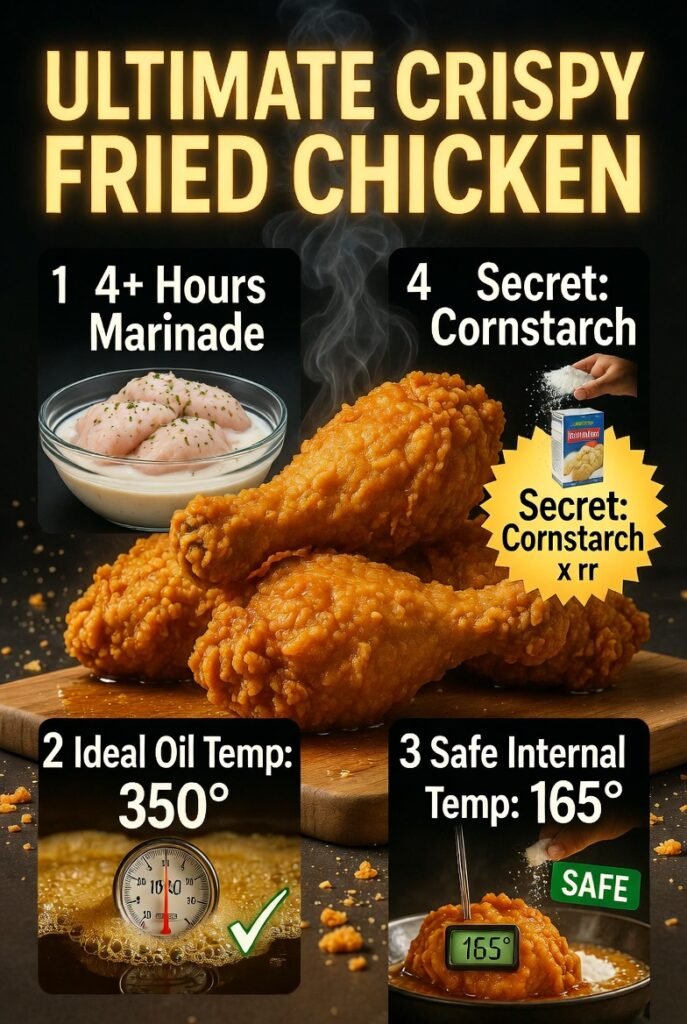
The buttermilk marinade is the foundation of everything. Food science research confirms that buttermilk does four distinct jobs simultaneously: it tenderizes the meat through lactic acid that gently breaks down proteins; it locks in moisture so the chicken stays juicy during the high-heat fry; it infuses the bird with subtle tang that balances the richness of the oil; and it creates a sticky surface that helps the seasoned flour coating cling and stay put. Unlike harsher acids like lemon juice or vinegar, buttermilk’s mild acidity tenderizes without making the meat mushy — a critical distinction.
The minimum is four hours. Overnight is better. If you skip the marinade, you’ll still get fried chicken — but not that fried chicken.
No buttermilk? Mix 2 cups of whole milk with 2 tablespoons of white vinegar or lemon juice. Let it sit for 5 minutes until it curdles slightly. It won’t be identical, but it works in a pinch.
Cornstarch: the crust game-changer
Most fried chicken recipes call for all-purpose flour alone. This one adds cornstarch — and the difference is significant. Cornstarch creates an exceptionally thin, rigid, glass-like crust because it contains no gluten. Gluten, when fried, creates a denser, chewier coating. Cornstarch proteins set hard and fast, producing that dramatic shatter on first bite that defines truly great fried chicken. A quarter cup blended into your flour mixture is all it takes.
The double dredge
For an extra-thick, shaggy crust — the kind that has craggy peaks and deep crevices that hold seasoning and crunch — dip your coated chicken back into the leftover buttermilk after the first flour dredge, then roll it through the seasoned flour a second time. Those jagged edges catch the oil and become the crispiest parts of the whole piece. Let the coated chicken rest on a wire rack for 10 minutes before frying so the coating bonds and stops any risk of it sliding off in the oil.
What’s the Right Oil Temperature for Frying Chicken?
Temperature is the single most controllable variable in fried chicken, and getting it right is the difference between greasy and golden. The target is 350°F (175°C) when the chicken goes in, with an acceptable range of 325–350°F throughout the cook. Below 325°F, the coating absorbs too much oil before it sets, leading to a heavy, greasy crust. Above 375°F, the outside burns before the inside reaches a safe 165°F internal temperature.
The oil will drop when cold chicken hits it — that’s normal. Turn the heat up slightly after adding each batch, then dial it back as the temperature stabilizes. A candy or instant-read thermometer clipped to the side of your pan takes all the guesswork out of it. Don’t try to eyeball it; accurate temperature control is what separates okay fried chicken from the kind people ask you to bring to every family gathering.
Choosing Your Cut: Bone-In Always Wins
You can fry boneless chicken breasts, and they’ll be fine. But bone-in, skin-on pieces — drumsticks, thighs, and split breasts — are what give Southern fried chicken its identity. The bone conducts heat from the inside out, helping the meat cook evenly. The skin renders down and becomes part of the crust structure. The fat in dark meat self-bastes the chicken during the fry, which is why thighs and drumsticks almost always come out juicier than breasts.
If you’re feeding a crowd, dark meat is your friend. It’s more forgiving of timing, it’s cheaper, and frankly — it tastes better fried. That said, a perfectly cooked breast, bone-in with the skin still on, finished in the oven if it’s very thick, is an extraordinary thing.
The Spice Mix: Layering Flavor the Right Way
One thing that sets this recipe apart from basic fried chicken is that the seasoning appears in two places: in the buttermilk marinade and in the dredging flour. This creates layers. The marinade season penetrates deep into the meat over those marinating hours. The flour seasoning creates a boldly flavored crust. Every single bite hits you with flavor, not just the ones where you happen to bite into a crevice.
The core lineup: garlic powder, onion powder, smoked paprika (not regular — the smokiness matters), cayenne for controlled heat, black pepper, salt, and dried oregano. Smoked paprika is doing double duty here — it adds flavor depth and gives the crust that gorgeous deep mahogany color that makes people stop and stare before they even take a bite.
Double the cayenne and add a teaspoon of chili flakes to the flour mix. You can also add a tablespoon of hot sauce directly to the buttermilk marinade — it won’t make the chicken taste like hot sauce, but it builds a warmth that runs through every bite.
The Wire Rack Rule (Never Paper Towels)
This one small detail is responsible for the difference between fried chicken that stays crispy for 20 minutes and fried chicken that stays crispy for hours. When you drain fried chicken on paper towels, the steam coming off the meat gets trapped between the coating and the paper. That steam softens the crust from underneath. The result is a crust that was beautiful for thirty seconds and then went limp.
A wire rack set over a baking sheet lets air circulate completely around the chicken. Steam escapes in every direction. The crust stays dry and firm. If you’re doing multiple batches, you can keep finished pieces warm in a 200°F oven on the rack while the rest cook — and they’ll still be crispy when everything is ready at the table.
What to Serve Alongside It
Southern fried chicken loves good company. Classic pairings include creamy mashed potatoes, collard greens slow-cooked with a little bacon, buttered cornbread, mac and cheese, coleslaw, and pickles to cut through the richness. Honey is wonderful drizzled over a fresh-out-of-the-oil piece — the sweet-salty-crispy combination is genuinely addictive. And if you want to go full Southern Sunday dinner, a simple white gravy on the side rounds everything out beautifully.
The Takeaways
Buttermilk overnight. Cornstarch in the flour. Oil at 350°F. Wire rack, not paper towels. Those four things, more than anything else, are what make the difference between good fried chicken and the kind people are still talking about at the end of the meal.
This is the recipe to pull out when someone’s coming home, when you want to feed people something that feels like care in edible form. Southern fried chicken has been doing exactly that — comforting, connecting, and delighting — for over two centuries. Make it. Let it fill your kitchen with that smell. And then watch what happens when you set it on the table.
Tried it? Leave a comment below and let me know how it turned out — or tag me on Instagram! I love seeing your kitchen victories. 🍗