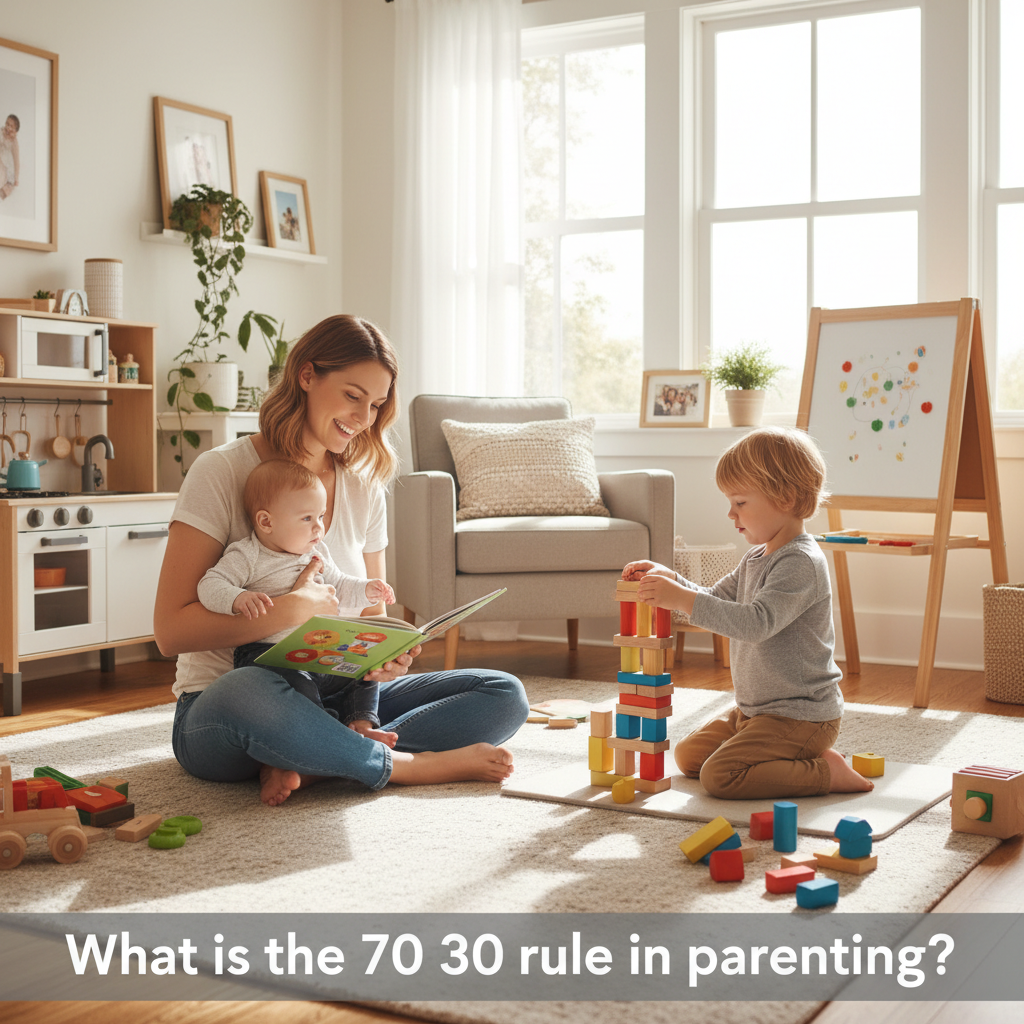
What is the 70/30 Rule in Parenting? How This Simple Change Saved Our Sanity
Look, I’m just going to be honest with you right off the bat. Last Tuesday, I found myself hiding in the pantry eating stale crackers while my 8-year-old Jared was having a meltdown about wearing socks, and baby Maddie was crying because… well, who knows why babies cry half the time, right?
That’s when it hit me – I was spending my entire day saying “no,” “stop,” and “don’t do that.” Sound familiar?
I stumbled across something called the 70/30 rule in parenting during one of those late-night Google spirals we all know too well. You know, the ones where you start looking up “how to get my kid to listen” and somehow end up reading about penguin mating habits at 2 AM.
But this one actually stuck. And honestly? It’s been a game-changer.
So What Exactly IS This 70/30 Thing?
Here’s the deal – it’s stupidly simple, which is probably why it works. You spend 70% of your parenting energy on the good stuff (connecting, praising, just enjoying your kids) and only 30% on the correction and discipline part.
I know what you’re thinking because I thought it too: “Great, another parenting expert telling me to be more positive while my kid is literally trying to flush his sister’s toy down the toilet.”
But hear me out.
Think about yesterday. How many times did you tell your kid what they were doing wrong versus how many times you told them what they were doing right? For me, before learning about this rule, it was like 90% correction and 10% actually enjoying my kids. No wonder everyone was miserable.
Why My Family Was Stuck in Correction Mode (Maybe Yours Is Too)
With Jared, I realized I’d become the “no” mom. You know her – she’s the one constantly redirecting, correcting, and managing every little thing. I was exhausted, he was frustrated, and poor little Maddie was just along for the chaotic ride.
Here’s what a typical morning looked like: “Jared, get dressed. Jared, brush your teeth. Jared, stop making faces at your sister while she’s eating. Jared, we don’t wear superhero costumes to school. Jared, PLEASE just put on normal clothes.”
Sound exhausting? It was. For both of us.
The thing is, kids are attention-seeking missiles. They’re going to get your attention one way or another. If the only way they can reliably get you to really notice them is by doing something wrong, guess what they’re going to keep doing?
The Lightbulb Moment (AKA When I Finally Got It)
The breakthrough came when I started paying attention to how Jared’s face lit up when I actually noticed something good he was doing. Like, really noticed and said something about it.
Instead of just “good job, buddy” (which, let’s be real, we say without even looking up from our phones half the time), I started being specific. “Jared, I saw you sharing your crackers with Maddie without me even asking. That’s the kind of big brother move that makes my heart happy.”
The kid practically glowed. And you know what? He started doing more things that made my heart happy.
What This Actually Looks Like in Real Life
Morning Madness: Before and After
Before: Pure survival mode. Everyone stressed, me barking orders, Jared resistant, Maddie crying because the chaos was overwhelming her.
After: I start the day with something positive. “Morning, my favorite 8-year-old! Did you have good dreams?” Then I might comment on something I genuinely notice – “Your hair is doing this cool spike thing” or “I love how you always check on Maddie first thing.”
Does he still need reminders about getting dressed and brushing teeth? Of course. But now those reminders come after connection, not instead of it.
I picked up these visual routine cards that help Jared remember what comes next without me having to be the reminder police. Game changer for busy mornings.
The Power of Catching Them Being Good
This sounds cheesy, but it works. Instead of waiting for perfect behavior (ha!), I started looking for small moments worth acknowledging.
With Jared: “I noticed you put your dishes in the sink without being asked. That’s really helpful.” Or “You’ve been so patient while I feed Maddie. Being a big brother isn’t always easy.”
With baby Maddie: “Look at you trying so hard to sit up! You’re getting stronger every day.” Or during diaper changes: “You’re being so cooperative. This makes everything easier for both of us.”
Creating Little Rituals That Actually Stick
We do this thing now where at bedtime, Jared and I each share the best part of our day. Sometimes it’s big stuff, sometimes it’s tiny – like how his teacher said his handwriting was getting neater, or how Maddie smiled when he made funny faces at her.
I got us one of those family gratitude journals to help us remember these moments. We don’t use it every day (because, you know, life), but when we do, it’s pretty sweet.
For Maddie, our ritual is simpler. During her evening bottle, I tell her about all my favorite Maddie moments from the day. She’s too young to understand the words, but she definitely gets the warm, happy energy.
When You Still Need to Be the Bad Guy (The 30% Part)
Let me be clear – this isn’t about becoming a pushover. Kids need boundaries, consequences, and yes, sometimes they need to be told no.
But here’s the thing I learned: when most of your interactions are positive, kids actually listen better when you do need to correct them.
Last week, Jared was getting too rough with Maddie during playtime. Instead of immediately jumping to “STOP THAT RIGHT NOW,” I could calmly say, “Hey buddy, I can see you’re excited to play with your sister, but that’s too rough for her little body. Show me how you can play gently.”
Because our relationship bank account was full of positive deposits, he actually listened. Revolutionary, right?
For Maddie, discipline mostly means making the environment safe so I don’t have to say no constantly, and using redirection when needed. Baby-proofing supplies have been worth their weight in gold for reducing those constant correction moments.
Different Ages, Same Principle
With Babies (Like My Maddie)
At this age, it’s mostly about responding warmly to everything they do. Celebrating when she tries to communicate, making feeding time pleasant instead of rushed, turning diaper changes into little connection moments.
I invested in some engaging sensory toys that give us natural opportunities to play and connect. When she’s exploring them, I get to be the enthusiastic narrator of her discoveries.
With School-Age Kids (Like My Jared)
Eight-year-olds need to feel competent and valued. The positive 70% includes noticing when he solves problems on his own, celebrating his growing independence, and actually being interested in the things he cares about (even when it’s the 47th time he’s explaining the rules of Pokemon to me).
Educational games that match his interests have been great for creating positive play time together while he’s learning.
The Hard Days (Because Let’s Be Real)
Some days, this 70/30 thing feels impossible. When Jared’s having a rough day at school and taking it out on everyone at home. When Maddie’s teething and nothing makes her happy. When I’m running on three hours of sleep and my patience is non-existent.
On those days, I aim for 50/50. Or honestly, sometimes I aim for just not yelling. Progress, not perfection.
I keep little reminder cards stuck around the house with phrases like “Connect before you correct” and “Look for the good.” They help when my brain is too fried to remember what I’m supposed to be doing.
What’s Actually Changed
It’s been about eight months since I started trying to follow this rule more intentionally. Here’s what I’ve noticed:
Jared cooperates more, but that’s not even the best part. The best part is that I actually enjoy being around my kids more. I’m not constantly braced for the next thing I need to fix or manage.
Our house feels lighter. Jared seems more confident, and he’s started pointing out good things about other people too. “Mom, look how gently Maddie is playing with her blocks. She’s getting so good at that.”
Maddie is still a baby, so it’s hard to say exactly, but she seems secure and happy. She lights up when we interact, and she’s hitting her milestones with confidence.
Making This Work for Your Family
Start Small
Pick one interaction per day where you’re going to focus on connection first. Maybe it’s when they get home from school, or during dinner prep, or right before bed.
Keep Track (At First)
For the first couple of weeks, I literally kept a mental tally. Positive interaction – mark one in the “good” column. Correction – mark one in the “necessary but not fun” column. It helped me see where I was actually spending my energy.
Get Your Partner On Board
If you’re not doing this alone, talk to your partner about it. It’s way more effective when everyone’s working from the same playbook.
Cut Yourself Some Slack
You’re going to have days where you’re at 30/70 instead of 70/30. That’s human. The goal isn’t perfection; it’s just being more intentional about creating positive moments with your kids.
The Bottom Line
Look, parenting is hard enough without spending all day feeling like the fun police. The 70/30 rule isn’t magic – it’s just a way to remember that our kids need way more connection than correction.
Does Jared still test boundaries? Of course. Does Maddie still have unexplainable meltdowns? Absolutely. But now those challenging moments happen in the context of a relationship that feels good for both of us most of the time.
And on the days when I mess up (because I definitely do), I can reset and try again tomorrow. That’s the beauty of this whole parenting gig – we get do-overs every single day.
Your kids don’t need you to be perfect. They just need you to notice them, enjoy them, and connect with them more than you correct them. Trust me, it makes everything easier – including the times when you do need to be the parent who says no.
Now if you’ll excuse me, I need to go tell Jared how awesome his Lego creation is. See what I did there?