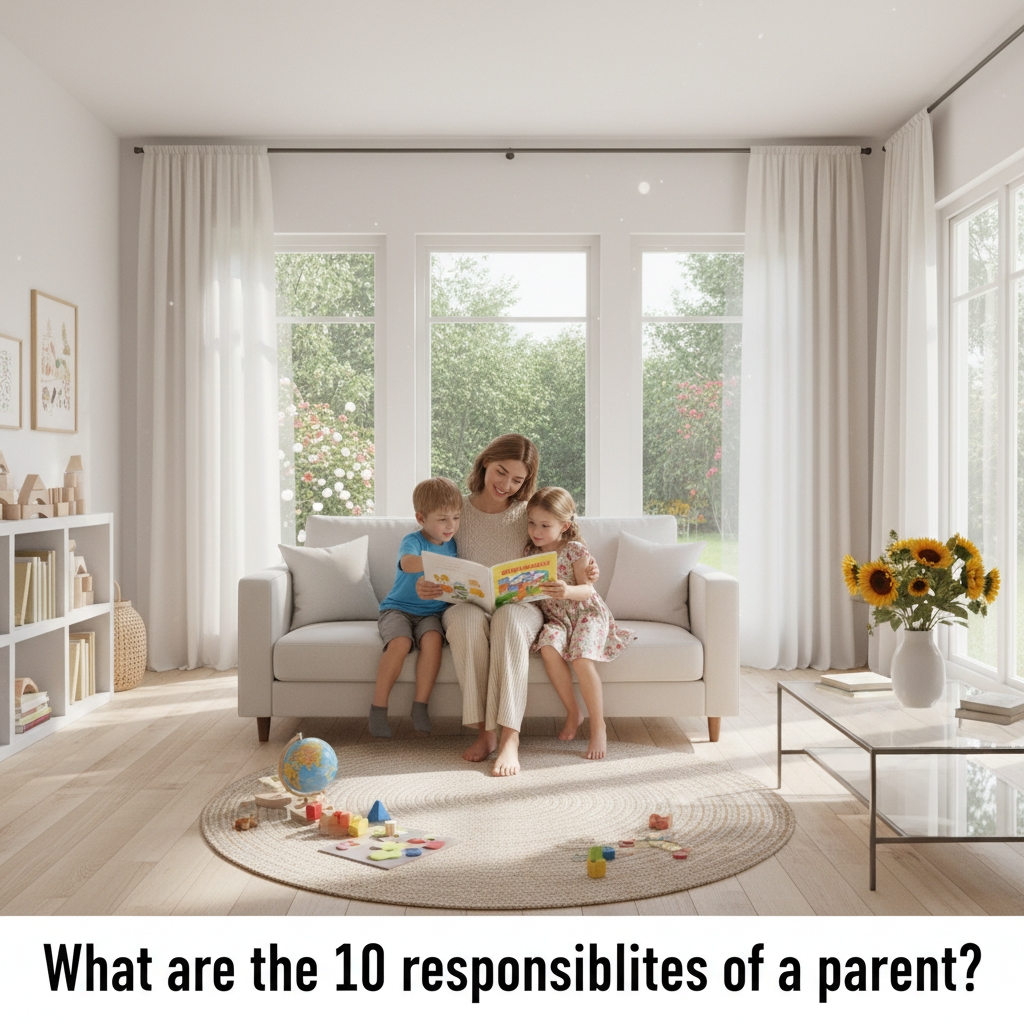
You know that moment when you’re holding your newborn for the first time and suddenly realize, “Holy crap, I’m responsible for keeping this tiny human alive”? Yeah, I had that moment twice – first with my son Jared eight years ago, and again recently with my daughter Maddie.
Let me tell you, parenting doesn’t come with a manual (trust me, I looked). But after eight years with Jared and several months with baby Maddie, I’ve figured out there are some non-negotiables when it comes to being a parent. Some lessons I learned the hard way, others through pure trial and error, and a few through those 2 AM Google searches we’ve all done.
Here’s what I’ve discovered about the real responsibilities that come with this crazy, beautiful job of raising kids.
1. Keeping Them Safe (Harder Than It Sounds)
This seems obvious, right? Keep your kid safe. But man, safety looks different at every age, and kids have a death wish I swear.
When Jared was little, I thought baby-proofing meant putting those little plastic things in outlets. Boy was I wrong. That kid could find danger in a padded room. Now at eight, he’s riding his bike around the neighborhood, and I’m that parent yelling “WEAR YOUR HELMET!” from the driveway.
With Maddie, I’m back to square one. Everything goes in her mouth – EVERYTHING. I found her trying to eat a dust bunny yesterday. How do dust bunnies even form that fast?
The thing about safety is you can’t bubble-wrap your kids (believe me, I’ve considered it), but you can teach them to make smart choices. Jared knows to look both ways, not talk to strangers, and call me if something feels wrong. Maddie… well, she knows not to put her fingers near the cat’s claws. Progress.
I swear by this baby safety kit from Amazon – it’s got everything you didn’t know you needed until your kid finds the one dangerous thing in any room.
2. Food, Shelter, Doctor Visits – The Basics That Aren’t So Basic
You’d think feeding your kids would be straightforward. You’d be wrong.
Jared went through a phase where he’d only eat foods that were beige. Chicken nuggets, crackers, bread – if it wasn’t beige, it wasn’t happening. I stressed about nutrition until his pediatrician told me, “He won’t starve himself. Keep offering variety, and eventually, he’ll eat it.” She was right, but those two months of beige food nearly drove me insane.
Now with Maddie starting solids, I’m dealing with a completely different challenge. This kid will eat anything – and I mean ANYTHING. She grabbed a handful of my salad the other day and went to town on it. Meanwhile, she refuses pureed carrots. Go figure.
Healthcare is another beast entirely. Jared’s had his share of ear infections, that mysterious rash that turned out to be nothing, and more bumps and bruises than I can count. The key is finding a pediatrician you trust and not googling every symptom at midnight (easier said than done).
3. Teaching Them It’s Okay to Feel Feelings
This one almost broke me when Jared was younger. The kid had BIG emotions about everything. Meltdown because his sock felt weird. Tears because I gave him the blue cup instead of the red one. I thought I was doing something wrong.
Turns out, helping kids process emotions isn’t about stopping the feelings – it’s about helping them understand what they’re feeling and why. Now when Jared gets frustrated with homework, we talk through it. “I see you’re upset. Math is hard sometimes. Let’s take a break and try again.”
With Maddie, it’s more about being responsive. When she cries, I don’t assume she’s being difficult – she’s communicating the only way she knows how. Sometimes she’s hungry, sometimes tired, sometimes she just wants to be held. And you know what? That’s okay.
The feelings cards I got on Amazon have been a game-changer for helping Jared identify emotions. Who knew there were so many words for “angry”?
4. Setting Rules (And Actually Sticking to Them)
Consistency is everything, and it’s exhausting.
Jared tests boundaries constantly – it’s his job as a kid, I get that. But man, some days I just want to give in and let him have ice cream for breakfast. The problem is, kids need to know what to expect. When I say bedtime is 8:30, I mean 8:30, not 9:15 after three stories and two glasses of water.
Even with baby Maddie, I’m starting to establish routines. Same bedtime routine, same nap schedule, same high chair rules (food stays on the tray, not on the floor – though she disagrees).
The hardest part isn’t setting the rules; it’s enforcing them when you’re tired, stressed, or just want five minutes of peace. But I’ve learned that being consistent now saves me headaches later.
5. Being Their First Teacher
School is important, but education starts at home, and it never stops.
With Jared, this means being involved in his homework without doing it for him (harder than it sounds). When he struggles with math, we work through problems together until he gets that “aha!” moment. When he’s excited about a science project, I’m researching volcanoes right alongside him.
For Maddie, everything is educational right now. I talk to her constantly – narrating what I’m doing, reading books, singing songs. She probably thinks I’m crazy, but studies show that early language exposure makes a huge difference.
The educational workbooks I found have made learning fun for Jared. He doesn’t even realize he’s practicing math when we’re doing “game time.”
6. Teaching Right from Wrong (Without Being Preachy)
This is where parenting gets tricky. You want to raise a good human, but you don’t want to be that parent who lectures constantly.
I try to use real-life situations with Jared. When he sees a kid being mean at school, we talk about empathy. When he makes a mistake, we focus on how to fix it rather than punishment for punishment’s sake. When he sees me mess up (because I definitely do), I show him how to apologize sincerely.
Kids watch everything you do. Jared notices how I treat the grocery store clerk, how I react when someone cuts me off in traffic, how I handle stress. Sometimes that’s terrifying, but it’s also an opportunity to model the behavior I want to see from him.
7. Teaching Them to Do Things Themselves
This one’s hard because it’s often easier to just do things yourself. But if I keep tying Jared’s shoes for him, when will he learn?
Jared now packs his own lunch (with supervision), keeps track of his homework, and takes care of his pet hamster, Mr. Whiskers. Are his lunches perfectly balanced? No. Does he sometimes forget to clean Mr. Whiskers’ cage until I remind him? Yes. But he’s learning responsibility in small, manageable chunks.
Even with Maddie, I let her explore and figure things out. When she’s trying to grab her toy, I don’t immediately hand it to her. I let her work for it (within reason). These little moments of independence build confidence.
8. Actually Talking TO Them, Not AT Them
Communication is huge, and it starts early.
With Jared, this means really listening when he tells me about his day, even when the story involves every single detail of what happened at recess. It means asking follow-up questions and showing genuine interest in what matters to him.
We have a bedtime routine where we share our “rose and thorn” – the best and worst part of our day. Sometimes his “thorn” is that his friend didn’t want to play the same game at recess. To him, that’s a big deal, so it’s a big deal to me.
With Maddie, I talk to her constantly. I tell her what I’m doing, ask her questions (even though she can’t answer yet), and respond to her babbles like we’re having a real conversation. My neighbors probably think I’m nuts, but she’s already starting to “talk” back.
9. Keeping Them Healthy (Physical Stuff)
This goes beyond just feeding them vegetables (though good luck with that).
Jared plays soccer, which means I’m dealing with sports schedules, equipment, and the occasional injury. We walk the dog together most evenings, not just for exercise but for quality time. I’ve learned that active kids are generally happier kids, even if it means more laundry.
Sleep is a constant battle. Jared thinks bedtime is merely a suggestion, and he’ll negotiate like a tiny lawyer. But I’ve learned that well-rested kids are easier to deal with in every other area.
With Maddie, it’s all about establishing good habits early. Regular sleep schedule, tummy time, keeping up with doctor appointments. The baby health guide I bought has been invaluable for knowing what’s normal and when to worry.
10. Loving Them No Matter What
This sounds simple, but it’s everything.
When Jared has a bad day and takes it out on everyone around him, I still love him. When he makes mistakes, I still love him. When he doesn’t make the baseball team he wanted, I still love him (and we get ice cream and talk about how trying your best is what matters).
With Maddie, this means being patient during those fussy periods when nothing I do seems to help. It means celebrating the small victories – first smile, first laugh, first time she slept for more than three hours straight (hallelujah).
Unconditional love doesn’t mean no consequences or boundaries. It means your love doesn’t change based on behavior. They need to know that home is safe, that you’re on their team, and that they can come to you with anything.
The Real Talk About Parenting
Here’s what nobody tells you: you’re going to mess up. A lot. I’ve lost my temper, made decisions I regretted, and had moments where I questioned everything. Last week, I accidentally put salt instead of sugar in Jared’s cereal. He was not impressed.
But you know what? Kids are resilient, and they don’t need perfect parents. They need present parents who are trying their best. Some days your best is homemade meals and educational activities. Other days your best is pizza delivery and extra screen time while you catch your breath. Both are okay.
The responsibilities of parenting are huge, but so are the rewards. Yesterday, Jared helped Maddie when she dropped her toy, without being asked. Moments like that remind me why all the sleepless nights, grocery store meltdowns, and worry are worth it.
Every kid is different, every family is different, and what works for us might not work for you. But these ten responsibilities? They’re universal. They’re the foundation that everything else is built on.
Being a parent means showing up every day, even when you don’t have all the answers. It means loving these little humans fiercely while slowly teaching them they don’t need you for everything. It’s the hardest job I’ve ever had, and I wouldn’t trade it for anything.
So to all the parents out there wondering if you’re doing it right – you probably are. And if you’re not, tomorrow’s a new day to try again. That’s the beautiful thing about this parenting gig. Every day is a fresh start, and our kids are usually more forgiving than we are to ourselves.
Trust me, you’ve got this. We’ve all got this. Even when it doesn’t feel like it.