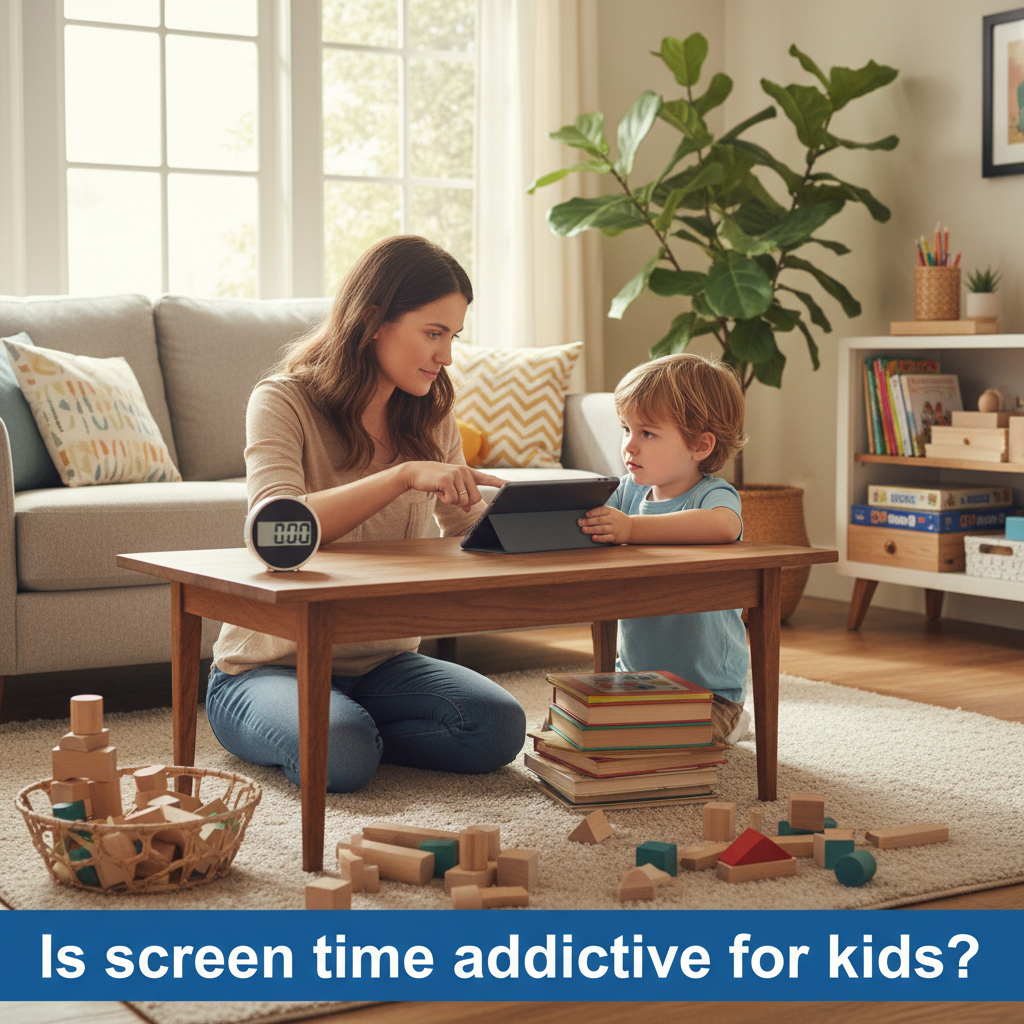
Is Screen Time Really Addictive for Kids? My Wake-Up Call
Okay, so picture this: I’m making dinner last week, and I tell my son Jared (he’s 8) that his hour of iPad time is done. You’d think I told him Santa wasn’t real. He literally threw himself on the kitchen floor and started screaming about how unfair life is. My baby daughter Maddie just stared at him from her high chair like he’d lost his mind.
That wasn’t even the worst part. The worst part was that this kind of thing had been happening almost daily for weeks, and I kept telling myself it was just a phase. Spoiler alert: it wasn’t.
I finally had my “oh crap” moment when Jared’s teacher mentioned he’d been having trouble focusing in class and seemed tired all the time. That same week, my neighbor asked if everything was okay because Jared had been “acting different” during their playdates.
So here I am, diving headfirst into research about kids and screen addiction, and let me tell you – what I found both scared me and made me feel way less alone in this struggle.
The Thing Nobody Warns You About
Here’s what I wish someone had told me when I first handed Jared an iPad at age 4: kids’ brains are basically sitting ducks for screen addiction. Not because they’re weak or we’re bad parents, but because their brains are literally wired differently than ours.
Every time Jared beats a level or gets some kind of reward in a game, his brain gets flooded with dopamine. It’s the same stuff that makes adults addicted to gambling or shopping, except kids get way more of it. Like, way more. Their brains are basically having a party every single time they interact with these devices.
And the companies making these apps? They know exactly what they’re doing. They hire actual brain scientists to figure out how to make their games as addictive as possible. When Jared tells me “just five more minutes” for the twentieth time, he’s not trying to manipulate me – his brain is literally craving that next dopamine hit.
Once I understood this, I stopped feeling like such a failure as a mom. This isn’t about willpower or good parenting. This is about billion-dollar companies using actual neuroscience to hook our kids.
The Signs I Totally Missed (Don’t Make My Mistakes)
Looking back, there were so many red flags that I either ignored or explained away. Maybe this will sound familiar to you:
Jared started getting these random headaches, especially after being on screens for a while. I thought maybe he needed glasses. Nope – just eye strain from staring at screens too much.
His sleep went completely off the rails. Even when he hadn’t been on devices right before bed, he’d lie there talking about YouTube videos or games he wanted to play tomorrow. His mind was just spinning.
The lying started small. “How long have you been on that?” “Just a few minutes, Mom.” When I’d check the screen time settings, it would say two hours. He wasn’t trying to be sneaky – he genuinely had no concept of how much time had passed.
But the thing that really got to me was watching him lose interest in everything else. Building blocks that used to keep him busy for hours sat untouched. Art supplies I’d spent good money on gathered dust. Even going to the park became something he’d whine about because he’d rather stay home and play games.
The Research That Actually Made Sense
I’m not a scientist, but I found some studies that explained a lot of what I was seeing with Jared. There’s this thing called brain plasticity, which basically means kids’ brains are constantly changing based on what they’re exposed to. Too much screen time actually changes the structure of their brains.
One study looked at kids who spent more than seven hours a day on screens (which honestly isn’t that hard to hit when you add up school computers, homework time, and entertainment). These kids showed thinning in the part of the brain that processes information. That’s not reversible, by the way.
Another study followed thousands of kids and found that the ones with lots of screen time did worse on thinking and language tests. Not just a little worse – significantly worse. And it got progressively worse over time.
When I read this stuff, I had two reactions: panic (oh my god, have I damaged my child’s brain forever?) and relief (okay, so this is a real thing, not just my kid being difficult).
What I Tried That Completely Backfired
My first instinct was to go full authoritarian. No more screens. Period. Done.
That lasted exactly 18 hours before I realized I’d just made our entire household miserable. Jared was bouncing off the walls, Maddie was cranky because big brother was cranky, and I was about to lose my mind.
The cold turkey approach doesn’t work because their brains are literally going through withdrawal. It’s like taking cigarettes away from a heavy smoker and expecting them to be perfectly fine the next day.
I also tried bribing him with extra screen time for good behavior, which was basically like giving an alcoholic free drinks for doing chores. Terrible idea that just made the problem worse.
The worst thing I did was using screens as a babysitter when things got chaotic. Maddie would be crying, dinner needed to be made, and I’d just hand Jared the iPad to buy myself some peace. But that taught him that screens were always available when things got stressful, which is exactly the opposite of what I wanted.
What Actually Started Working
After a lot of trial and error (and a few more epic meltdowns), here’s what finally started making a difference:
Baby Steps That Actually Stick: Instead of cutting screen time in half overnight, I reduced it by 15 minutes every week. Sounds ridiculously slow, right? But it worked because Jared’s brain had time to adjust. Now we’re down to one hour on school days and I barely get any pushback.
Making Other Stuff More Appealing: I had to get creative here. I bought the big LEGO Classic set from Amazon and started building things myself when Jared was around. Suddenly he was interested again. Same thing with art supplies – if I was drawing or crafting, he’d want to join in.
Using Tech to Fight Tech: This was a game-changer. I got this Circle Home Plus thing that automatically shuts off devices when time is up. Now I’m not the bad guy – the device just stops working, and Jared can’t argue with a machine.
The Visual Schedule: I made a simple chart showing when screens were okay and when they weren’t. Having clear, predictable rules reduced the constant negotiating because Jared always knew what to expect.
Quality Over Quantity: Not all screen time is created equal. Educational apps like Khan Academy Kids (you can get it through Amazon) were totally different from mindless games. Jared was calmer afterward and transitioned away more easily.
Planning Different for Baby Maddie
Watching Jared’s journey has completely changed my approach with Maddie. She’s only a baby, but she’s already fascinated by phones and tablets. Instead of making the same mistakes twice, I’m being way more intentional from the start.
Right now, Maddie gets most of her entertainment from regular toys. That Baby Einstein musical toy from Amazon has been amazing – it’s engaging and educational without any addiction risks. When she does see screens, it’s for very short periods with simple, interactive content.
I’m hoping that starting with healthy habits from day one will make this whole process easier with her. We’ll see!
The Mistakes I’m Still Making
Let’s be real – I’m not perfect at this. There are still days when I’m exhausted and hand over devices just to get a break. Sometimes I let screen time run over because I’m dealing with something else. And yes, I still check my own phone too much in front of the kids.
The difference now is that I recognize when I’m slipping back into old patterns, and I course-correct faster. It’s about progress, not perfection.
When Things Got Scary
There was a point where I seriously considered calling our pediatrician because Jared’s behavior was so concerning. He was having what looked like anxiety attacks when screen time ended, and he’d completely lost interest in activities he used to love.
If you’re seeing severe withdrawal symptoms, major drops in school performance, or your child completely refuses to do anything that doesn’t involve screens, don’t hesitate to get professional help. Some kids need more support than parents can provide alone.
The Stuff That Surprised Me
The biggest surprise was how much MY screen habits affected Jared’s. Kids watch everything we do, and if I’m constantly on my phone, of course he’s going to think that’s normal behavior.
I also didn’t expect how much better our whole family dynamic became once we got screen time under control. We talk more during meals, Jared plays with Maddie more, and our evenings are actually pleasant instead of being one long battle over devices.
Another surprise was how much Jared’s sleep improved once we created boundaries. I thought the bedtime battles were just part of having an 8-year-old, but it turns out a lot of it was screen-related overstimulation.
What I Wish I’d Known Earlier
Screen addiction in kids is real, but it’s not permanent. With consistent effort and patience, you can absolutely turn things around.
Start making changes gradually. Your kid’s brain needs time to adjust to lower levels of digital stimulation, and dramatic changes will just make everyone miserable.
Have alternatives ready. If you’re taking away something your child loves, you need to have other engaging options available, or they’ll just fixate on what they can’t have.
It’s not about eliminating technology entirely. It’s about teaching kids to have a healthy relationship with it, which is a skill they’ll need their entire lives.
Where We Are Now
As I’m typing this, Jared is outside riding bikes with his friend instead of asking to play online games together. Maddie is sitting next to me, happily banging wooden blocks together instead of trying to grab my laptop.
It’s been about six months since I started taking this seriously, and while we still have occasional struggles, the daily battles are mostly gone. Jared sleeps better, focuses better in school, and actually seems happier overall.
The process wasn’t quick or easy, but it was absolutely worth it. If you’re dealing with similar issues, please know that you’re not failing as a parent, and small changes really can lead to big improvements over time.
Every family is different, so what worked for us might need tweaking for your situation. But the important thing is to start somewhere and stay consistent. Your kids’ brains are incredibly resilient, and it’s never too late to create healthier habits.
Screen time can definitely be addictive for kids, but with patience and the right approach, you can help them develop the skills they need to use technology in healthy ways. And honestly? Going through this challenge has made me a more intentional parent in every area, not just with screens.
Quick note: Some of the product links in this post are affiliate links, which means I might earn a small commission if you buy something. But I only recommend stuff we actually use and love!