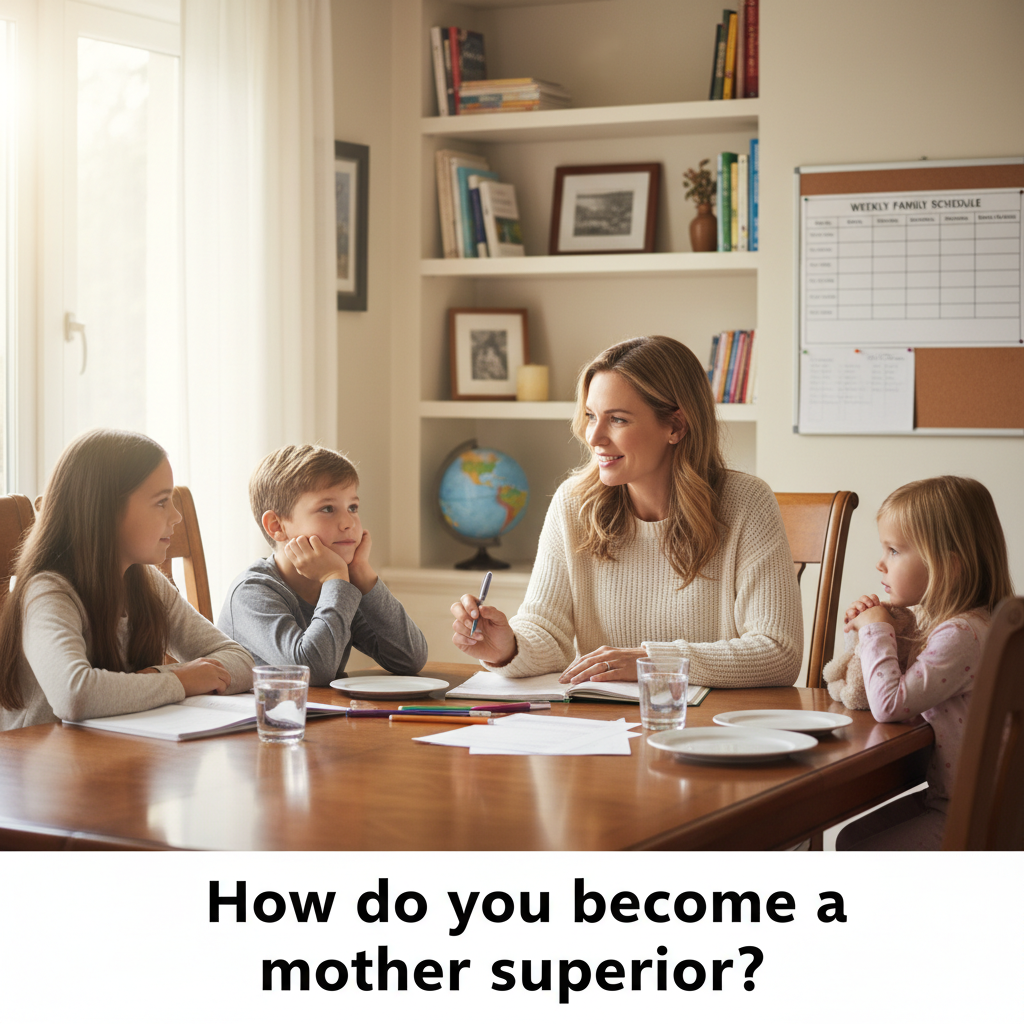
Last night, my 8-year-old son Jared caught me completely off guard. As I was getting him ready for bed, he looked up at me with those curious eyes and asked, “Mom, what’s a mother superior?” We’d been watching an old movie earlier, and apparently, this question had been brewing in his little mind all evening. While I was rocking baby Maddie to sleep afterward, I kept thinking about his question. It made me realize how many people probably wonder the same thing but never get a real answer.
So here I am, writing this post at 11 PM with a cup of coffee that’s probably going to keep me up way too late. But Jared’s curiosity got me thinking – maybe it’s time someone explained what it really takes to become a mother superior.
What Exactly Is a Mother Superior?
Okay, let’s start with the basics because honestly, I had to do some research myself after Jared’s question. A mother superior (sometimes called an abbess, depending on the religious order) is basically the head of a convent or religious community of women. Think of her as the principal, CEO, and spiritual mom all rolled into one person.
She’s not just sitting around praying all day (though prayer is definitely a big part of it). She’s making tough decisions about budgets, settling disputes between sisters, dealing with maintenance issues, and somehow finding time to provide spiritual guidance to everyone under her care. It’s honestly one of the most demanding leadership roles I can think of.
When I explained this to Jared, he said, “So she’s like the mom of all the nuns?” And you know what? That’s actually not a bad way to put it.
The Calling – It’s Not Like Choosing a Career
Here’s something I learned that really surprised me: you don’t just wake up one day and decide you want to be a mother superior. It starts with what Catholics call a “religious vocation” – basically, feeling called by God to live a religious life.
Some women say they felt this calling as young girls. Others discover it later in life, sometimes after having families of their own. There’s no timeline that works for everyone.
The discernment process usually involves:
Lots of prayer and soul-searching. We’re talking serious, deep prayer sessions where you’re basically asking God, “Is this what you want for my life?” It’s not a decision you make lightly.
Working with a spiritual director. This is usually a priest or experienced religious sister who helps you figure out if what you’re feeling is a genuine calling or just emotions running high after watching “Sister Act” for the tenth time.
Spending time with different religious communities. Each order has its own personality and focus. Some are all about contemplative prayer, others run schools or hospitals. You need to find where you fit.
[Perfect spot for Amazon affiliate links to books about religious discernment – “Discerning Religious Life” or “The Purpose Driven Life” would work great here]
School’s Not Optional – The Education Side
Most religious orders today expect their sisters to have at least a high school diploma, but many prefer college graduates. This isn’t your grandmother’s convent where you could enter with just a eighth-grade education.
Here’s what most communities look for:
A bachelor’s degree in almost anything, though theology, education, social work, and nursing are popular choices. Makes sense when you think about the kind of work most religious communities do.
Formal theological training because you can’t lead a religious community without understanding Catholic theology, scripture, and church history inside and out.
Some kind of leadership experience whether that’s managing a department at work, leading a volunteer organization, or even successfully running a household (hello, fellow moms!).
[Another great spot for affiliate links – Catholic theology textbooks, leadership books like “Good to Great” or “The 7 Habits of Highly Effective People”]
Languages are becoming increasingly important too. If you’re in the U.S., Spanish is almost essential in many areas. The Catholic Church is incredibly diverse, and good leaders need to connect with people from all backgrounds.
The Long Road Through Religious Life
Becoming a mother superior isn’t something that happens overnight. You’re looking at years – sometimes decades – of preparation.
Postulancy (6 months to 2 years): This is like the trial period. You live with the community but keep wearing regular clothes while everyone figures out if this is a good fit. It’s kind of like a really extended job interview, except it’s for your entire life.
Novitiate (1-2 years): Now things get serious. You receive the religious habit (the nun outfit, for those wondering) and often take on a religious name. This is intensive training time where you learn everything about the community’s history, spirituality, and way of life.
[Great place for affiliate links to religious items – prayer books, rosaries, or even books about religious habits and their history]
First Vows (3-6 years): These are temporary vows of poverty, chastity, and obedience. You’re officially a sister now, but you’re still in formation. This is when most sisters start doing active ministry work while continuing their education and spiritual development.
Final Vows: After proving yourself during the temporary vow period, you make perpetual vows. This is the big commitment – you’re in this for life.
Climbing the Leadership Ladder
Here’s where it gets interesting. Just because you’ve made final vows doesn’t mean you’re ready to be a mother superior. You need to prove yourself as a leader within the community first.
This usually means:
Taking on ministry leadership roles. Maybe you start by coordinating the community’s teaching ministry or managing their healthcare outreach. You need to show you can handle responsibility and make good decisions.
Handling the practical stuff. Can you manage a budget? Coordinate schedules? Deal with contractors when the convent roof starts leaking? These practical skills matter just as much as spiritual ones.
Mentoring newer sisters. Good mother superiors know how to guide others in their spiritual growth. If you can’t help a struggling novice, you’re probably not ready for the top job.
Crisis management. Every community faces difficult situations. How you handle conflicts, financial problems, or personal crises shows whether you have what it takes for leadership.
The thing that struck me most in my research is that religious leadership is different from regular business leadership. It’s what they call “servant leadership” – you’re there to serve others, not to be served. It’s actually a lot like parenting in that way.
Getting Elected – Yes, It’s Actually Democratic
Most religious communities elect their mother superior, which I found fascinating. It’s not like the Vatican just appoints someone from above.
Here’s how it typically works:
Eligibility requirements: You usually need to have been in perpetual vows for at least 5-10 years and meet certain age requirements. Each community has its own rules.
Nomination period: Community members nominate sisters they think would make good leaders. No campaigning with yard signs, though – that would be weird.
Prayer and discernment: Instead of political campaigns, there’s a lot of prayer and reflection. Sometimes candidates share their vision for the community, but it’s all very dignified and spiritual.
Secret ballot voting: Sisters vote privately, and you usually need a simple majority or two-thirds majority to win.
Bishop approval: The local bishop has to sign off on the results to make sure everything’s legitimate and the chosen candidate meets all the canonical requirements.
[Good spot for books about Catholic Church governance or religious community management]
The Reality Check – Challenges and Rewards
Let me be honest here – being a mother superior today isn’t easy. These women face some serious challenges:
Declining vocations are a huge issue. Many communities are aging, with fewer young women entering religious life. It’s heartbreaking, really.
Financial pressures are intense. Running schools, hospitals, and other ministries while dealing with reduced income requires serious business skills.
Keeping up with technology while maintaining traditional religious practices. Imagine trying to explain to a 90-year-old sister why the community needs a website and social media presence.
Rebuilding trust after various scandals have rocked the Catholic Church. Good leaders spend a lot of time working to restore confidence in religious institutions.
[Perfect place for nonprofit management books or organizational leadership resources]
But despite all these challenges, the women I read about seem genuinely fulfilled by their roles. They talk about:
Deeper spiritual growth that comes from the responsibility of leading others to God.
Community impact – being able to shape not just the religious community but also all the people they serve.
Building a legacy that will influence their religious community for generations.
Personal fulfillment from using all their gifts – spiritual, intellectual, and practical – in service of something bigger than themselves.
What I Learned (And What I Told Jared)
After all this research, I had a follow-up conversation with Jared over breakfast. Baby Maddie was in her high chair making a mess with her cereal, and Jared was still curious about mother superiors.
I told him that these women are like the ultimate moms – they take care of entire communities of people, make tough decisions for everyone’s good, and try to help people become their best selves. They sacrifice having families of their own to take care of God’s family.
Watching Maddie grab for everything on the table and Jared asking a million questions made me think about how similar leadership is, whether you’re running a household or a convent. You need patience, wisdom, the ability to see potential in people, and enough love to keep going when things get tough.
The path to becoming a mother superior is long and demanding. It requires years of education, spiritual formation, and proving yourself as a leader. But for women who feel called to this life, it represents the ultimate way to serve God and others.
Final Thoughts
Writing this post has been eye-opening for me. I had no idea how much goes into becoming a mother superior or how challenging and rewarding the role can be.
Whether you’re exploring a religious vocation yourself or just curious like my son Jared, I hope this gives you a better understanding of what it takes to lead a religious community. These women have chosen to dedicate their entire lives to serving God and others – and honestly, after learning about everything they do, I have nothing but respect for that choice.
[Final opportunity for affiliate links – books about women saints, religious leadership, or resources for those discerning religious vocations]
Now if you’ll excuse me, I need to go answer about fifty more of Jared’s questions. Apparently, he’s now curious about what monks do all day. Here we go again!