My Kid Was Failing and I Had No Clue What to Do (Real Talk About Grades)
Okay, so last month I’m sitting in my car after parent-teacher conferences just staring at Jared’s report card. My 8-year-old has a D in math. A freaking D! And I’m thinking, where did I go wrong?
I’ve got baby Maddie at home who’s only 10 months old, but she’s already showing signs of being crazy smart – she figured out how to open cabinet doors last week (RIP my sanity). So what’s going on with Jared?
I called my mom crying. Literally crying in a Target parking lot because I felt like such a failure. She laughed at me (thanks, Mom) and said “honey, some kids just need different things. Figure out what Jared needs.”
Easier said than done, right?
The Homework Wars Were Real
Y’all. The nightly homework battles were INTENSE. Picture this: Jared at the kitchen table, me trying to feed Maddie her dinner, and everyone crying. Yes, even me sometimes.
It would take us literally two hours to do 20 minutes worth of homework. Jared would look at a math problem and just shut down. Like, completely zone out. I’d be getting more and more frustrated, he’d be getting more upset, and nothing was getting done.
One night he looked at me with tears streaming down his face and said “Mom, I think I’m just stupid.”
That broke my heart into a million pieces.
The next day I marched into that school and had a real conversation with his teacher, Mrs. Rodriguez. Best decision ever.
Turns Out My Kid Isn’t Broken, He’s Just Different
Here’s what Mrs. Rodriguez told me that changed everything – some kids need to SEE things to understand them. Jared can’t just listen to an explanation and get it. He needs pictures, he needs to touch stuff, he needs to move things around.
Mind. Blown.
All this time I’m sitting there explaining multiplication tables for the hundredth time, and he just needs to see it. So we got these little counting blocks from Amazon (here’s the exact set we use) and suddenly math started making sense to him.
I felt so dumb for not figuring this out sooner. But also relieved? Like, there’s nothing wrong with my kid, he just learns differently.
The Homework Setup That Actually Works
First thing I did was kick everyone out of the kitchen during homework time. Sounds mean, but it works.
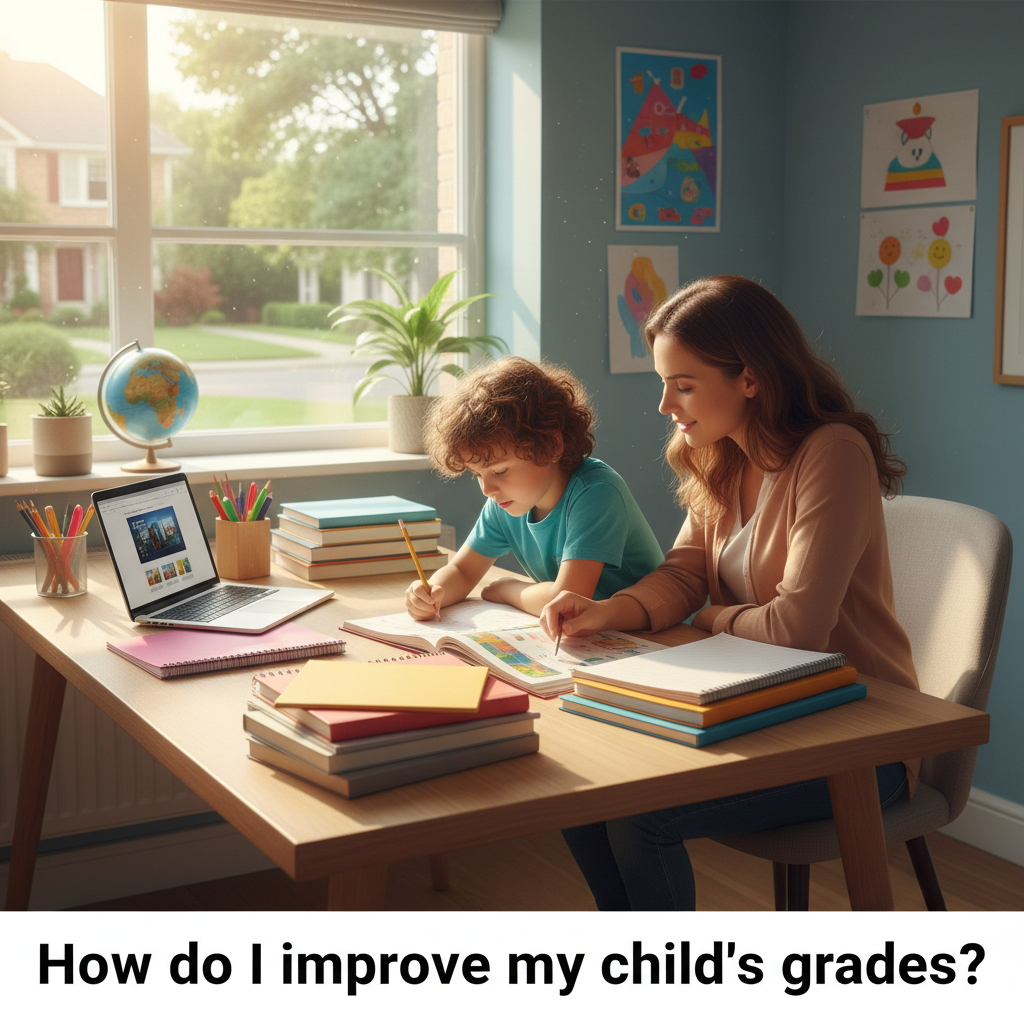
I set up this little corner in Jared’s room with a desk that’s actually his size (got this IKEA one that doesn’t break the bank). Put all his supplies in these little containers so he’s not digging around looking for a pencil for ten minutes.
Game changer. Now he sits down, everything’s right there, and we can actually focus.
Maddie gets her dinner and playtime in the living room with cartoons (judge me, I don’t care), and Jared gets the quiet he needs. Everyone’s happy.
Reading Was the Secret Sauce
I never realized how much reading affects EVERYTHING else. Like, math word problems? You gotta be able to read them first. Science tests? Same thing.
So we started this thing where we read together every single night. Sometimes he reads to me (painful at first, not gonna lie), sometimes I read to him. Started with these easy chapter books that don’t make him feel like a baby but aren’t too hard.
Now? Kid reads everything. Cereal boxes, street signs, my texts over my shoulder (annoying but I’m proud). His teacher says his reading level jumped like crazy this year.
Math Doesn’t Have to Be Torture
Remember those counting blocks I mentioned? Total game changer. But we also started doing “sneaky math” around the house.
Cooking dinner? Jared measures ingredients. Going to the store? He figures out which size cereal is cheaper. Playing with Maddie’s toys? We count and sort everything.
Math is everywhere, and when kids see it’s actually useful for real stuff, they stop being so scared of it.
Also, I stopped freaking out when he got problems wrong. Now we just figure out what happened and try again. Way less stressful for everyone.
Talking to Teachers (Without Feeling Like an Idiot)
I used to be so intimidated by teachers. Like, they’re the experts and I’m just some mom who clearly doesn’t know what she’s doing.
But Mrs. Rodriguez made me realize they WANT parents involved. She emails me back super fast when I have questions. When I told her about the visual learning thing, she started using more pictures and hands-on stuff in class.
We’re like a team now instead of me feeling like I’m bothering her all the time.
Organization Skills (Because Apparently That’s Not Automatic)
Jared’s backpack used to look like a tornado hit it. Papers everywhere, broken pencils, random toys mixed in with homework. I thought he was just being careless.
Turns out kids literally don’t know HOW to organize stuff. Their brains aren’t developed enough yet. Who knew?
So we practiced. Got him this kid-friendly planner and spent time every day writing down assignments and due dates. Put up a big calendar in his room where we mark test days and project deadlines.
Now he actually knows what’s due when instead of being surprised all the time.
When We Needed Backup
Even with all this stuff, Jared was still struggling with reading comprehension. Like, he could read the words but didn’t understand what they meant together.
Found this retired teacher in our neighborhood who does tutoring. Best money I’ve ever spent. She works with him twice a week on reading strategies that actually make sense to him.
Having that outside help took so much pressure off me. I don’t have to be the expert at everything.
Screen Time That Doesn’t Rot Your Brain
I was super anti-screen time for learning because I figured he got enough iPad time already. But some of these educational apps are actually pretty good.
We use Khan Academy Kids for math practice. It’s free, it adjusts to his level, and he can mess up without me seeing it and getting stressed about it.
The key is using it WITH regular studying, not instead of it.
Building Confidence (The Hardest Part)
This has been the toughest thing. Jared had convinced himself he was “bad at school” and changing that mindset is HARD.
Instead of saying “good job, you’re so smart” (which I used to do all the time), now I say stuff like “wow, you really didn’t give up on that problem” or “I love how you tried three different ways to figure that out.”
Focusing on effort instead of results has made such a difference. He doesn’t automatically assume he can’t do something anymore.
What I’m Doing Different with Maddie
Maddie’s obviously way too little for homework, but I’m already thinking about this stuff. I read to her every day (even though she mostly chews on the books). I talk to her constantly about what we’re doing – “now we’re measuring water for your bottle” or “look, this block is bigger than that one.”
I know every kid is different, so what works for Jared might not work for her. But at least I won’t wait until there’s a problem to start paying attention to how she learns.
Real Talk: Some Days Still Suck
Last week Jared had a complete meltdown over a science project. Threw his pencil across the room, said he hated school, the whole dramatic 8-year-old thing. I ended up yelling, which made everything worse.
So yeah, we’re not perfect. Some days homework still feels like a battle. But it’s way better than it was, and most importantly, Jared doesn’t hate school anymore.
What Actually Worked
If I had to tell another parent the most important stuff:
Figure out HOW your kid learns. Seriously, this changes everything. Some kids need to see it, some need to hear it, some need to move around while they do it.
Get organized but keep it simple. Visual calendars, supply containers, consistent routines. Nothing fancy, just systems that make sense.
Talk to the teacher regularly. They’re not scary, they want your kid to succeed too.
Focus on effort, not grades. This was huge for us. When Jared started believing he could figure things out instead of thinking he was just bad at stuff, everything improved.
Make learning part of regular life instead of this separate torture thing that only happens during homework time.
Where We Are Now
Jared’s grades are mostly B’s now, which feels amazing after that scary D. But honestly, the grades aren’t even the best part. He comes home excited about stuff he learned at school. He asks questions about things. He doesn’t automatically say “I can’t do this” anymore.
Yesterday he helped me figure out how much paint we needed for his bedroom walls. Used multiplication and everything. Six months ago he would have run away if I mentioned math.
As for Maddie, she’s currently perfecting her crawling skills and trying to eat everything she finds on the floor. But I’m already reading to her every day and talking about colors and shapes and numbers. Starting early this time.
The Bottom Line
Look, I’m not an education expert. I’m just a mom who figured out that what I was doing wasn’t working and had to try something different.
Every kid is different. What worked for Jared might not work for your kid. But the important thing is paying attention to what YOUR kid needs and being willing to change course when something isn’t working.
And giving yourself permission to ask for help. From teachers, from other parents, from tutors, from whoever. You don’t have to figure this out all by yourself.
Also? Your kid’s grades don’t define them or you. Jared is still the same awesome, creative, dinosaur-obsessed kid he was when he had a D in math. He just needed some different strategies to show what he could do.
If your kid is struggling, don’t panic (okay, panic a little, it’s natural). Just start paying attention to what they need and be willing to try new things. It gets better, I promise.