This post contains Amazon affiliate links. If you purchase through these links, I may earn a small commission at no extra cost to you. I only recommend products I genuinely believe in.
Making your own baby food sounds intimidating — until you realize it’s mostly just cooking real food and blending it. Once you get the hang of it, you’ll wonder why you ever stressed about it. This guide walks you through every stage, from those first thin purees all the way to soft finger foods your little one can pick up themselves.
Why Make Homemade Baby Food?
Before we dive into recipes, let’s talk about why so many moms make the switch. Store-bought pouches are convenient, no question — but homemade baby food lets you control exactly what goes into your baby’s mouth. No fillers, no added sugar, no mystery ingredients. Plus, it’s genuinely more affordable, and babies who eat homemade food from the start tend to be more adventurous eaters as toddlers.
You don’t need a lot of fancy equipment, either. A good blender or food processor, some ice cube trays for freezing, and you’re basically set. If you want to go all-in, a dedicated baby food maker like the BEABA Babycook does the steaming and blending in one pot — genuinely convenient for busy mornings.
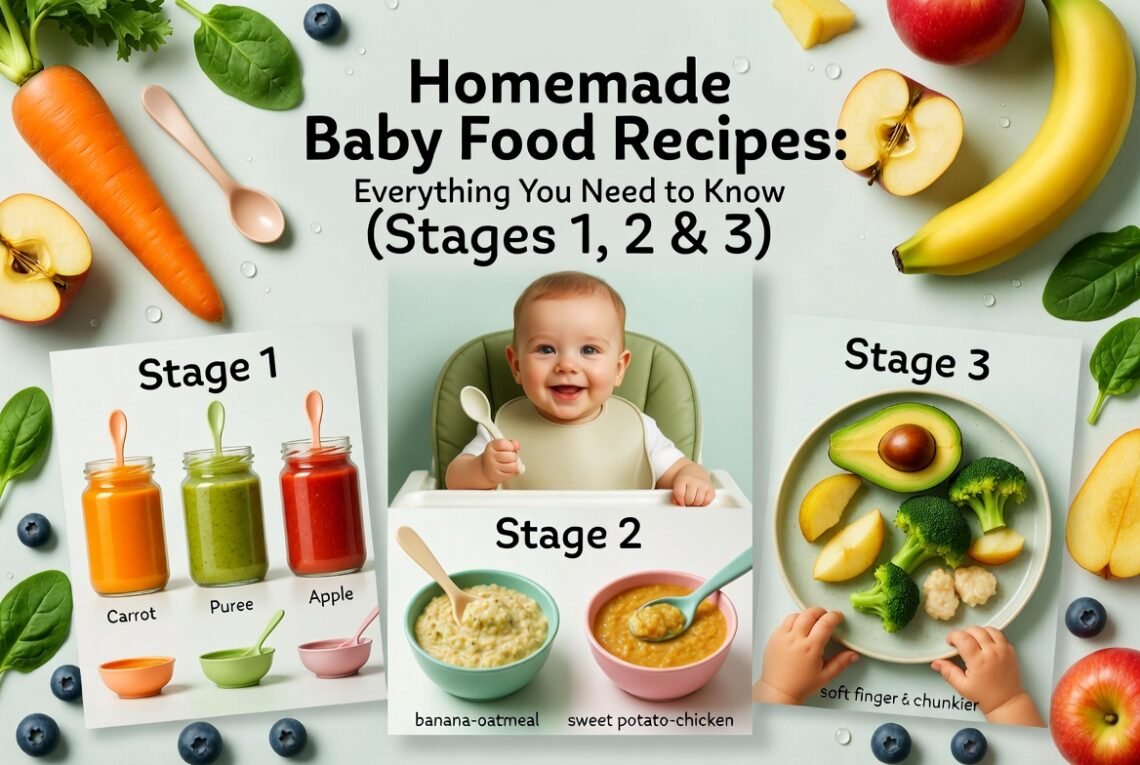
Stage 1 Baby Food (4–6 Months): First Purees
At this stage, everything should be smooth, thin, and runny — almost the consistency of yogurt. Babies are just learning to move food to the back of their mouth, so there can’t be any lumps. Start with single-ingredient purees so you can spot any allergies or sensitivities.
Sweet Potato Puree
Sweet potato is a perfect starter. It’s naturally sweet, easy to digest, and packed with beta-carotene.
How to make it:
- Peel and cube one medium sweet potato.
- Steam until completely tender (about 15 minutes).
- Blend with enough breast milk, formula, or water to reach a thin, smooth consistency.
- Freeze in an ice cube tray for easy portions.
Pea Puree
Peas have a naturally bright flavor that helps babies get comfortable with vegetables early on.
How to make it:
- Steam 1 cup of frozen peas until tender (about 5 minutes).
- Blend until very smooth.
- Push through a fine mesh strainer to remove any remaining skins.
Apple Puree
Simple, classic, and almost universally loved.
How to make it:
- Peel, core, and chunk 2 apples (Gala or Fuji work great).
- Steam until soft, about 10 minutes.
- Blend until completely smooth, adding water as needed.
Stage 1 tip: Always introduce one new food at a time and wait 3–5 days before introducing another. This makes it much easier to identify any reactions.
Stage 2 Baby Food (6–8 Months): Combination Purees
By around 6 months, your baby is getting the hang of swallowing and can handle slightly thicker textures. This is where the fun starts — you can combine ingredients and introduce spices like cinnamon, ginger, and mild herbs.
Sweet Potato, Apple & Cinnamon
This combo is cozy, warming, and babies absolutely love it.
Ingredients:
- 1 medium sweet potato, peeled and cubed
- 1 apple, peeled and cored
- ¼ tsp cinnamon
How to make it:
- Steam sweet potato and apple together until very tender.
- Blend with cinnamon until smooth.
- Thin with water or breast milk if needed.
Pea, Spinach & Pear
A great way to sneak in leafy greens without a fight.
Ingredients:
- ½ cup frozen peas
- 1 handful of baby spinach
- 1 ripe pear, peeled and cored
How to make it:
- Steam peas and pear until soft.
- Add raw spinach to the blender (the heat from the peas will wilt it).
- Blend until smooth.
Banana, Avocado & Breast Milk
No cooking required — this one comes together in about two minutes.
Ingredients:
- ½ ripe banana
- ¼ ripe avocado
How to make it:
- Mash both together with a fork.
- Thin with breast milk or formula to your baby’s preferred consistency.
- Serve immediately (this one doesn’t freeze well).
Stage 2 tip: A hand immersion blender is a game-changer at this stage. You can blend directly in the pot and skip washing an extra appliance.
Stage 3 Baby Food (8–12 Months): Soft Chunks & Finger Foods
Around 8 months, babies are ready to start working on their pincer grasp and handling soft, mashable textures. You can stop straining or over-blending — small soft chunks are totally fine and actually help them develop chewing skills.
Soft Lentil & Veggie Mash
Lentils are one of the best first protein sources — they cook fast and blend beautifully.
Ingredients:
- ½ cup red lentils, rinsed
- 1 small carrot, diced
- ½ zucchini, diced
- 1 cup low-sodium vegetable broth
How to make it:
- Combine everything in a small pot and bring to a boil.
- Reduce heat and simmer for 20 minutes until lentils are completely soft.
- Mash with a fork or use an immersion blender for a chunkier texture.
Mini Banana Oat Pancakes
These are perfect finger food — soft, easy to pick up, and genuinely delicious.
Ingredients:
- 1 ripe banana
- 1 egg
- ¼ cup rolled oats (use certified gluten-free oats if needed)
How to make it:
- Mash banana well, then mix in egg and oats.
- Let sit for 2 minutes so the oats soften.
- Cook small spoonfuls in a lightly greased pan over medium-low heat, about 2 minutes per side.
- Cut into small pieces before serving.
Soft Chicken & Sweet Potato
A complete little meal that freezes beautifully.
Ingredients:
- 1 small chicken breast
- 1 medium sweet potato, peeled and cubed
- ½ cup low-sodium chicken broth
How to make it:
- Simmer chicken breast in broth until cooked through (about 15 minutes).
- Steam sweet potato separately until tender.
- Shred the chicken finely and combine with mashed sweet potato.
- Add a little broth to reach your desired consistency.
Stage 3 tip: A silicone suction plate is worth every penny at this stage. It sticks to the high chair tray and dramatically reduces how much food ends up on the floor.
How to Store Homemade Baby Food
In the fridge: Fresh purees keep for 3 days in an airtight container.
In the freezer: Most purees freeze well for up to 3 months. Pour into silicone ice cube trays, freeze until solid, then pop them into a labeled zip-lock bag. One cube is usually about 1 ounce — a helpful reference when you’re planning portions.
The Souper Cubes 1-ounce tray is a mom favorite for baby food specifically because the silicone is extra easy to pop out, even when frozen solid.
Reheating: Thaw overnight in the fridge or warm from frozen in a small pot over low heat. Always stir well and test the temperature before serving.
A Few Things to Remember
- No honey before 12 months — this is a firm one, no exceptions. Honey can carry botulism spores that are harmless to adults but dangerous to babies.
- No added salt or sugar — babies’ kidneys aren’t ready to process extra salt, and sugar just creates preferences you’ll have to battle later.
- Cow’s milk as a drink is not recommended until 12 months, but small amounts used in cooking are generally fine.
- Watch for choking hazards — at every stage, make sure nothing is too firm, round, or sticky.
This post contains Amazon affiliate links. If you purchase through these links, I may earn a small commission at no extra cost to you. I only recommend products I genuinely believe in.